Trump’s Greenland push strains ties with Europe’s far-right allies
European nationalist parties that have often aligned with Trump’s politics are criticizing his plan to take control of Greenland, revealing tension between sovereignty-first movements in Europe and U.S. interventionist impulses.
- PUBLISHED
- UPDATED
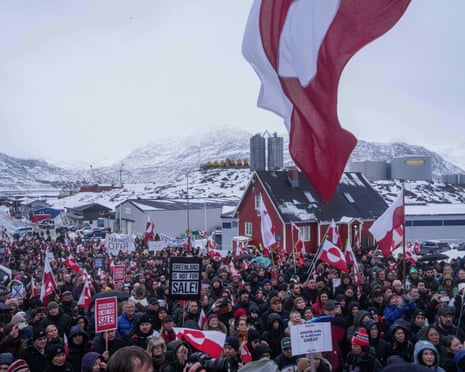
A dispute over Greenland is widening political fractures between President Donald Trump’s MAGA movement and some of its traditional allies among Europe’s far-right parties, according to a report from The Associated Press. The controversy centers on Trump’s proposal to bring Greenland under U.S. control—an idea that has drawn condemnation from European leaders and unexpected pushback from nationalist parties that typically champion sovereignty above all.
The AP reports that parties such as France’s National Rally, Germany’s AfD, and Italy’s ruling right-wing party have criticized the Greenland plan as imperialist and destabilizing. Even figures often sympathetic to Trump’s brand of politics have characterized the initiative as hostile. The conflict is forcing Europe’s nationalist right to choose between ideological affinity with Trump and a core belief that borders and national autonomy should be defended against outside power.
The episode is also spilling into policy debates beyond Greenland itself. The AP notes that far-right lawmakers have moved to block a proposed EU-U.S. trade pact, arguing that Washington’s posture toward European territory and sovereignty makes deeper economic alignment riskier. That reaction illustrates how an external security dispute can rapidly cascade into trade and regulatory fights.
Analysts cited by the AP describe the moment as a test for a political alliance that has been held together by shared opposition to immigration, globalist institutions, and liberal cultural policy. When questions shift from domestic identity politics to territorial integrity and strategic autonomy, Europe’s far-right often demands strict limits on foreign influence—regardless of whether that influence comes from Brussels, Beijing, or Washington.
Notably, reactions have varied across Europe. The AP suggests western European political actors have shown sharper resistance, while some leaders in eastern Europe have offered more muted responses, preferring diplomacy and maintaining ties to Trump. That uneven response reflects differing threat perceptions, economic dependencies, and domestic political incentives.
Whether the dispute becomes a lasting rupture is unclear. The AP frames it as a revealing stress test: it shows how quickly a cross-Atlantic ideological coalition can splinter when confronted with a sovereignty dispute, and how Europe’s own nationalist parties may become constraints—rather than amplifiers—on Trump’s foreign-policy ambitions.